
At the end of 2024, I was not sure I would return to running, especially participating in and completing long-distance trail races, as a regular form of enjoyment in my life.
Last year, I was in the middle of the longest hiatus from running, any running, since I completed my first Turkey Trot in 2011 and almost puked at the end.
I’d had a rough last few years: I finished No Business, my first hundred-mile race, in 2022 and completed my PhD later the next year.
After those victories, though, things grew more challenging. I DNFed my attempt in the autumn of 2023 to earn the “double buckle” at No Business, completing the course in the opposite direction. 2024 brought six months of dental pain, including several root canals, and I gradually turned in fewer and fewer miles until sometime that summer, amid a big interstate move, I found that I was no longer running at all.
I still participated in a few races: Shawnee Hills in late August of that year (setting my slowest 50k time) and the Tunnel Hill 10 miler the first weekend of November. I volunteered at No Business, to keep open the possibility of returning in 2025. Sweeping the last 14 miles of the course, moving slowly enough to capture pictures and talk with my companion about the flora we saw along the trail, was a delight.
But though I talked about wanting to return to running, I couldn’t be sure that a return was in my future, or that when I did return, I would be successful. I wondered if ultras, beloved hours and days deep in the woods and off cell service, were past me.
During this time, I resonated with other runners who wrote and spoke of finding new ways to bring joy into their lives, outside of running. I hung a bird feeder off my porch. I took long walks through the woods. I took up cycling, establishing connections with people in the community outside of my small professional circles.
I did return to running in 2025. In January, No Business offered early registration following my volunteer shift, I decided I couldn’t pass up the opportunity for redemption, and I was in. I started to train.
And then in May, a setback: I DNFed a 50 mile race I had high hopes for.
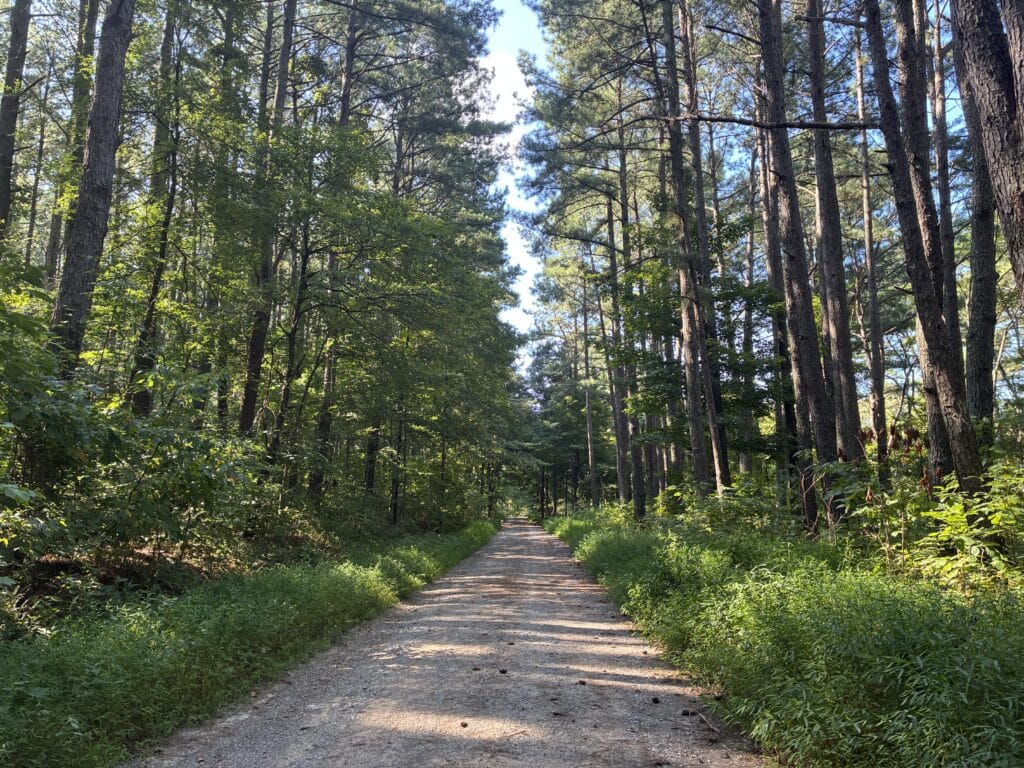
Parts of the race reminded me why I love trail running: I tried to distract myself from my rising nausea by staring across the valley at the ridgelines of the southern mountains, tree-covered and glorious. I met a lot of great folks on the course, many of whom expressed concern for me as I stopped to puke. I spent forty minutes flat on my back at the midway point aid station, trying not to worry about whether ticks were crawling in my hair (I never found any) and getting surprisingly on-point career advice from someone I’d met on the course. (If you’re reading this, thank you. I still think about that career advice.)
But the experience also threw me. Why was I spending so much money and time just to DNF races? Maybe I was not physically cut out for ultras?
But I was still signed up for No Business, so I turned my attention that summer to shoring up my weak points, as best I could. I read up on the science of hydration, experimented with various drinks, and started to train myself in ways that went beyond just running as many miles as I could.
Along the way, I deliberately kept my weekly training load lower. I ran no more than 50 miles/week. On top of that, I added regular morning walks and long rides for weekly bike group, for 10-13 hours of activity each week. This was a different choice than when I completed No Business the first time, turning in 60-70 miles/week of running at my peak. In aiming at a lower weekly goal, I was deliberately working to integrate running with my existing personal and professional commitments, to avoid running taking over my life and creating stress for me. Here too, I was following the lead of other runners who spoke of the value of lowering weekly mileage to maintain overall wellness. I feared that the balance I’d worked hard to construct in my life would fall apart if I pressured myself into going above 50 miles a week, turning in early early mornings or late late nights and ignoring other responsibilities to get there. I wanted to complete No Business, but I wanted to be a person too.
My lower-key, focus-on-solving-my-problems, build-up-other-forms-of-joy approach paid off. I went into No Business in 2025 feeling strong and had a great day on the trails –– moving along during a gloriously cool, sunny autumn day, through the red-and-gold woods and on into a chilly night. I only puked once. Despite a rougher second day, as the heat rose and mild hallucinations set in, I completed the full loop and set a strong PR of 31.47, a strong PR.
But I don’t want to frame this as an overcoming story, a yay me I’m back! story, a common genre within the endurance sports community. Because on the other side of this, I’m a different person and a different runner.
Completing No Business in both directions, running the race twice, was –– more than I realized going in –– a significant life goal for me, one that has had its own effects on my relationship with long-distance running.
I’m very proud of No Business, and I had a lot of fun in the woods, from the overnight hours alone in the dark on the remotest part of the course to warming myself at aid stations and eating pancakes.
I’m also still eyeing new places to run, still obsessed with the 100 mile distance. I have exciting challenges ahead of me.
But my approach to ultra trail running has changed since No Business. (Or at least I would like it to change –– like all changes, it’s a work in progress.)
I run differently –– consistently lower mileage, especially during the off-season; hiking and biking to connect with family and friends; and volunteering at races as a way to stay engaged and support the larger community of the sport. (I highly recommend volunteering at a race –– you get all the fun of an ultra without actually having to run one.)
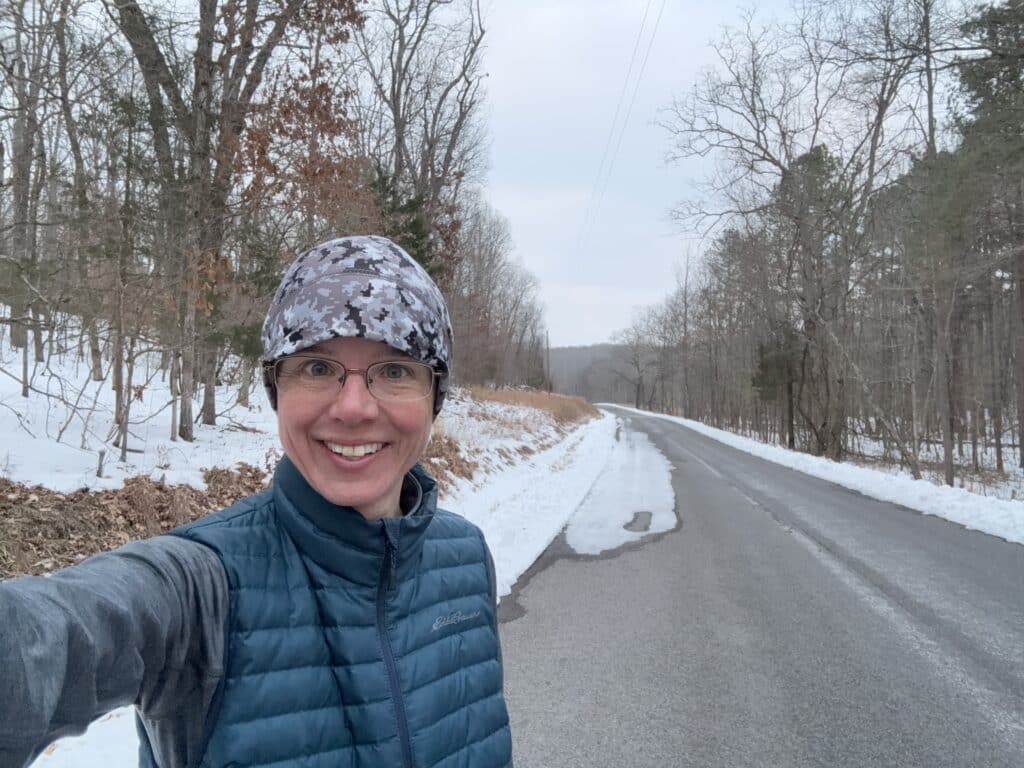
I’m also considering new ways to stay involved with the sport. I ran in solidarity with the Move Thru Darkness event this winter. I want to continue to volunteer and do trail work, especially given the increased threat public lands face, and ensure that we can all collectively enjoy trails for years to come.
I share this story because I suspect it likely resonates with other people.
The longer we remain active in the sport, the likelier we are to experience a period –– a few months or years –– when our preferred form of trail running is no longer available to us, for reasons of health or finances or life change. Or we may find that our goals in the sport, the things we care about, shift. What do we do when that happens?
Trail running is also swiftly growing into a much bigger sport –– an exciting change but one that brings an opportunity to reflect on our values and the ways we want to continue to engage, beyond simply registering for more races. How do we want to respond to the way our sport is changing around us?
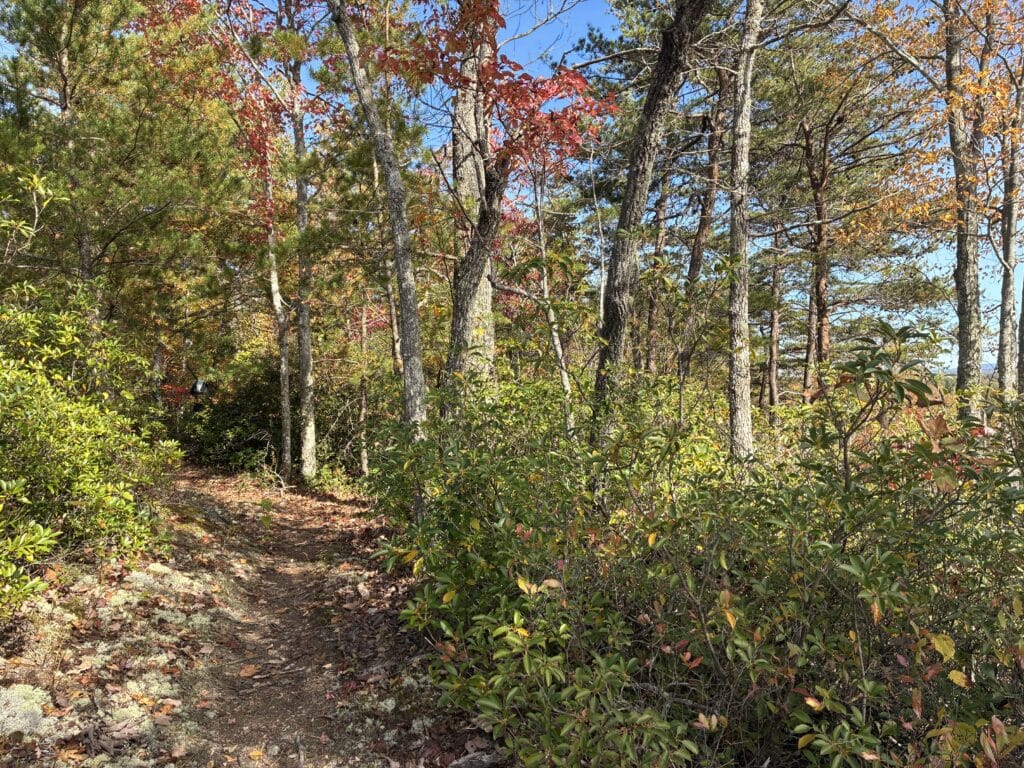
For me, I do hope to participate in, and finish, big races for years to come, always pushing beyond my limits. I want to be at least a little terrified by what I’m taking on, when I go into a race!
But I also want to honor the many ways to find joy in this life and the importance of rest. I want to give back to the trails and communities that make the sport what it is. I want to engage with trails and trail running in ways that invite other people in and do good for me, and in the world around me. I haven’t always figured out what these actions look like for me, but these are the goals I am working towards.
Rhetoric, my academic field, has a concept called kairos, or timeliness, which means (among other things) that there’s real power in deciding on our course of action based on the current moment. We often do more meaningful work when, instead of trying and failing to meet a universal standard unsuited for us, we do the thing most suited to the present moment, most rooted in our own values and goals.
And so this is the question I’ve been asking myself, and the one I leave with you: Given my own values and well-being, given everything happening in the sport and in the world, who do I want to be in the sport? How do I want to engage with running now?
And then, we go and do that thing.



3 Responses
I love running. I really enjoy the process. I like the structure of the hobby. I don’t race, it has never appealed to me. I don’t know any other runners and I’ve always been left behind in groups so I stopped trying to join them. I would love to meet other slow runners who are out there just to have fun if anyone knows where to look.
I really appreciate you mentioning the threat to public lands. With trail running participation increasing by over 200% globally in the last decade, the physical impact on our ecosystems is real. Volunteering and trail work aren’t just ‘extra’ they are what keep the sport sustainable. For someone looking to get into trail work for the first time, do you recommend reaching out to local race directors or looking for regional trail alliances?
That’s a great question! I haven’t been doing trail work very long –– the work I’ve done is associated with nonprofit organizations associated with local public lands/trails (e.g. conservancy groups, friends of groups, trail associations, etc). Depending on your location, an org such as Runners for Public Lands or Colorado Trail Foundation have some trail work days as well. I participated in a trail/public lands cleanup for National Public Lands Day in mid-September last year. That could also be something to look into.